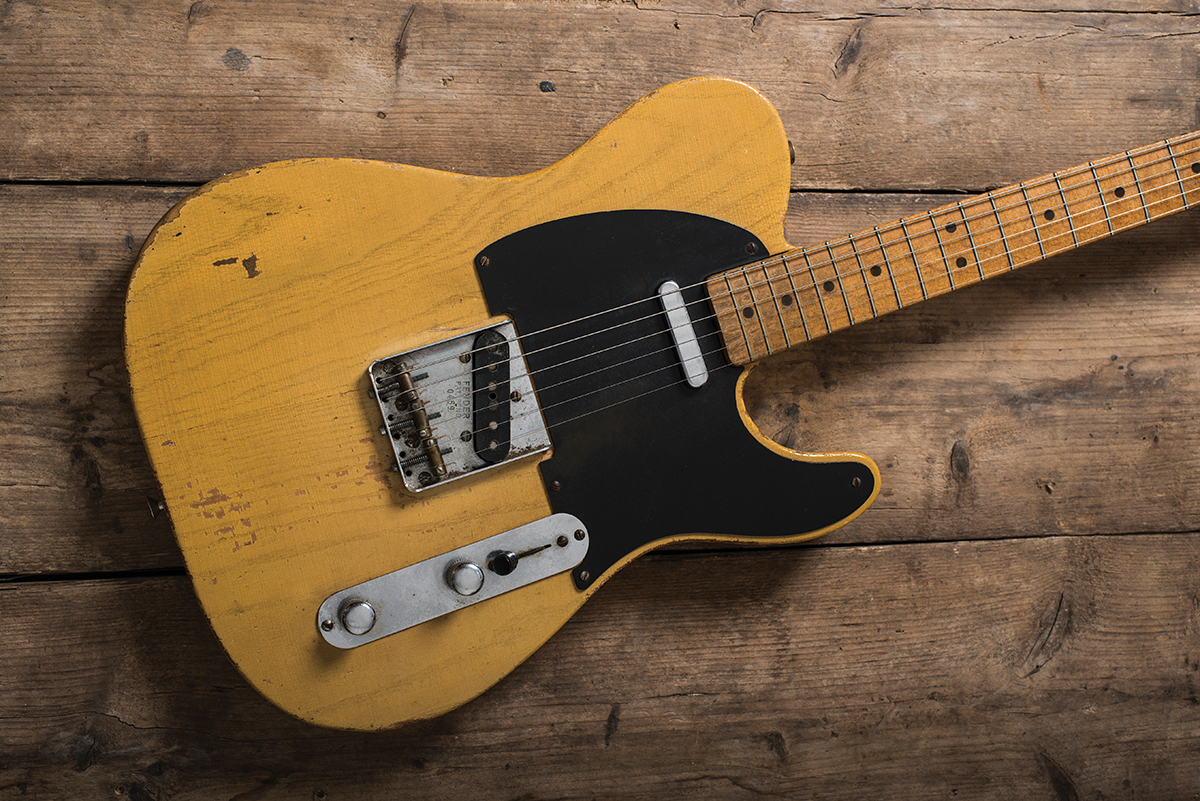
There's a version of this argument that never ends: Gibson guys swear by set necks, Fender guys swear by bolt-ons, and everyone who builds neck-throughs thinks they've solved something the other two haven't. What actually separates them is simpler and more physical than the tribalism suggests. It comes down to one thing: how much wood is touching how much wood, and how tightly.
That's it. The rest follows from there.
The Bolt-On
Leo Fender invented the bolt-on neck for manufacturing reasons, not tonal ones. In 1950, it meant you could swap a neck without touching the body, replace a damaged part cheaply, and build guitars on an assembly line with semi-skilled labor. It was an industrial solution to an industrial problem. The fact that it also sounds good was a fortunate accident.
The traditional bolt-on, four bolts through a plate into the heel, was designed to be built fast and fixed easily rather than to last 60 years. And it works, for a while. But the joint has real weaknesses that compound over time. The contact surface between neck and body is relatively small. There's often a gap at the heel pocket. Bolts can loosen. And critically, string tension pulls on the fretboard end of the neck relentlessly, which over decades leads to fretboard plane deterioration. The fretboard tilts very slightly upward relative to the body, and at some point no amount of truss rod adjustment gets it back.
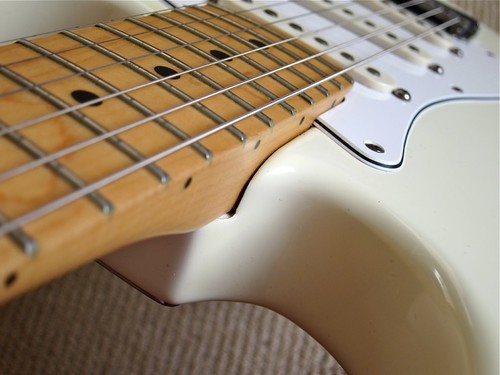
Builders like Novo and Tom Anderson have done exceptional work within the bolt-on format: tight pockets, serious hardware, real attention to the joint. You can feel the difference between a sloppy bolt-on and a precise one immediately. But even a perfect execution is working within the inherent limits of the geometry.
The Set-Neck
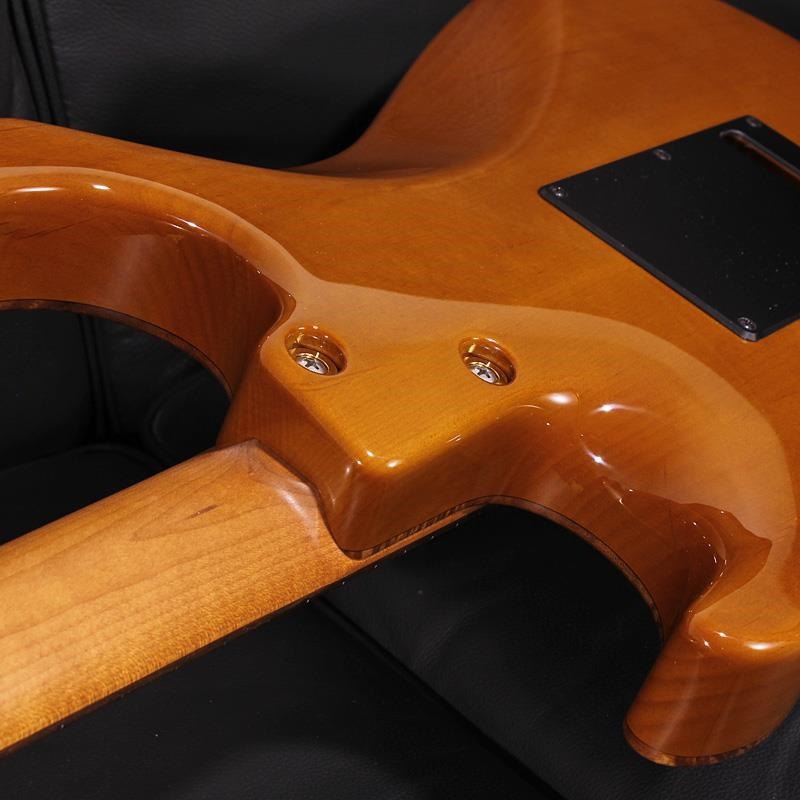
A well-made set-neck is genuinely magic. When the tenon is long, the glue joint is clean, and the fit is tight, you get a level of resonance and sustain that's hard to argue with. The wood-to-wood contact area is larger than a bolt-on, the joint doesn't move, and the neck and body communicate more freely as a result.
The key word is long. There's a reason older Gibsons with long tenons sound better than their short-tenon counterparts: more contact, more coupling, more of everything. The long tenon extends deep into the body and transfers energy across a much greater surface area. The short tenon, which Gibson moved to in the seventies for production efficiency, cuts that contact area dramatically. You can hear it.
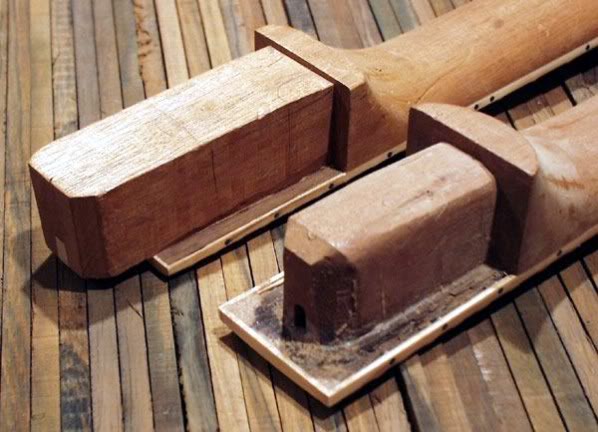
The concept behind the set-neck is sound. The problem is that glue is doing the structural work, and that can become an excuse for sloppiness. If there's space in the pocket, it doesn't matter much because the glue fills it. So some builders leave space. The joint holds, but it isn't performing the way a truly tight-fit set-neck can. PRS does it right. Their set-necks are precise, the tenons are serious, and it shows in how their instruments sound and sustain.
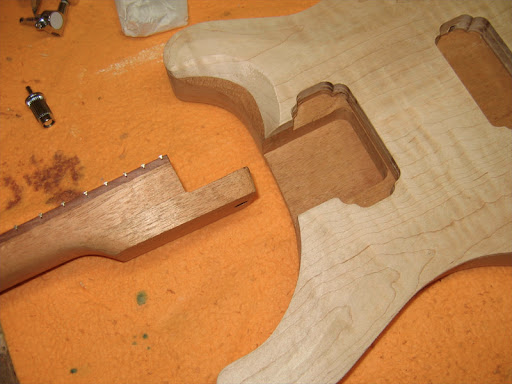
The other issue with set-necks is practical: if something goes wrong with the neck, you're in for a significant repair. Resets are possible but not trivial, and on a production instrument, the economics rarely make sense.
The Neck-Through
Neck-through construction takes the contact-area argument to its logical extreme: the neck is the body, running from headstock to strap button as one continuous piece, with wings glued on for the body shape. No joint at all, in theory.
In practice, I don't care for it, and not for tonal reasons. The bigger issue is that you're committed to one wood from the headstock all the way through the body. That's a significant constraint on how the instrument responds and feels. The neck wood has different acoustic properties than what you'd choose for the body, and with a neck-through you don't get to optimize both independently. You compromise.
There's also a repairability problem. If a neck-through instrument is seriously damaged, your options are limited in a way that neither a bolt-on nor a set-neck would be. For a working instrument that's going to be played hard and travel, that's a real consideration.
The Bolt-Through™
Everything I've built toward with the Bolt-Through™ design comes from a simple premise: take the accessibility and serviceability of a bolt-on and give it the contact area and coupling of a long-tenon set-neck.
Think of it as a very long tenon that bolts rather than glues. The neck heel on the Artifact extends beneath the pickups, which dramatically increases the joint's surface area and the mass at the connection point. Three large machine screws connect to threaded inserts in the body. The result is a joint that doesn't move along any axis, transfers energy across a much larger surface than a traditional bolt-on, and can still be disassembled if it ever needs to be.
Look at the PRS joint above: wide, flat, serious contact area. That's the right instinct. The Bolt-Through™ takes that geometry and extends it significantly further into the body, while adding mechanical fastening instead of relying on glue.
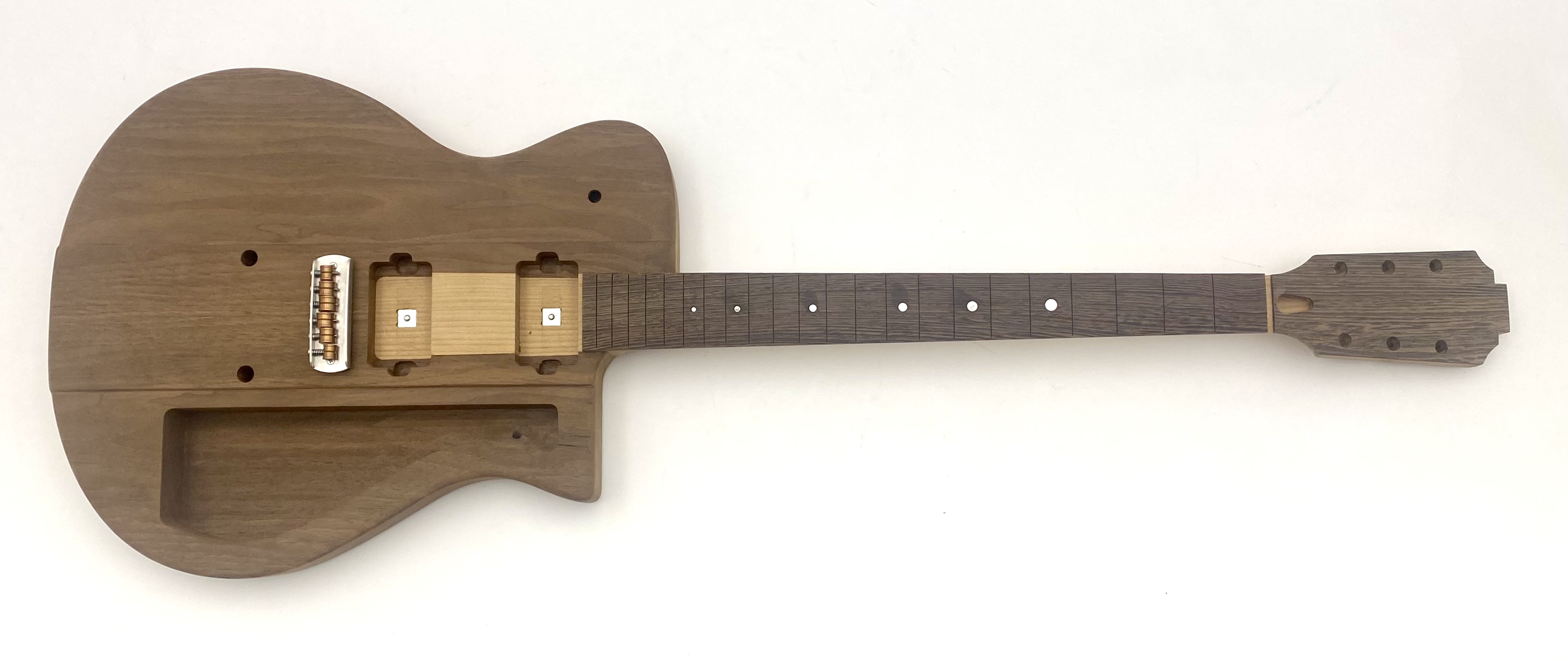
The extended heel does something else important: it redistributes string tension load away from the fretboard's end. That's the force that causes fretboard plane deterioration in traditional bolt-ons over decades of use. By moving the fulcrum point, you take that stress off the joint and spread it more evenly. Tone is part of it. So is what the instrument is still doing 40 years from now.
The carbon fiber reinforcement running the full length of the neck works with this. Ultralight, extremely rigid, it adds coupling and eliminates the dead spots that can appear in even well-made necks. The combination of the extended joint, the threaded inserts, and the carbon reinforcement produces an instrument that feels more connected and alive than the traditional bolt-on geometry allows, with none of the practical limitations of a glued joint.
What to Actually Listen For
If you're evaluating a guitar and want to hear the joint, play unplugged first. A good joint means energy moving freely between neck and body, and you should be able to feel it in the wood with the amp off. Notes should bloom and sustain without sounding compressed or choked off. Dead spots, where certain notes just don't sustain the way adjacent ones do, are almost always a joint and coupling problem.
Then plug in. A well-coupled guitar sounds more three-dimensional through an amp: the fundamental is stronger, the harmonics are richer, and the note has a clear beginning and a natural decay rather than cutting off abruptly. You can EQ around a lot of things. You can't EQ around a poor joint.
The joint is the foundation. Everything else is built on top of it.