The electric guitar is probably the most significant instrument born in the early 20th century. Its role in shaping the sonic architecture of the last hundred years is universally recognized. What gets less attention is the engineering underneath: the mechanics of how a vibrating string becomes an amplified note, and what happens to that signal along the way.
Among the factors that determine how an electric guitar sounds, one stands above the rest: coupling. Coupling is the relationship between the mechanical vibrations of the strings and the instrument's ability to sustain, transfer, and ultimately translate those vibrations into an electrical signal. It is not an abstract concept. It is the reason two guitars with identical pickups can sound completely different. It is the reason bridge design matters. It is the reason the neck joint is not a detail.
Understanding coupling is the foundation of everything that Artifact is built on.
A Brief History
Before the electric guitar existed, acoustic guitars faced a practical problem: they couldn't be heard over larger ensembles. The solution was electrical amplification, and the first attempts were closer to experiments than instruments.
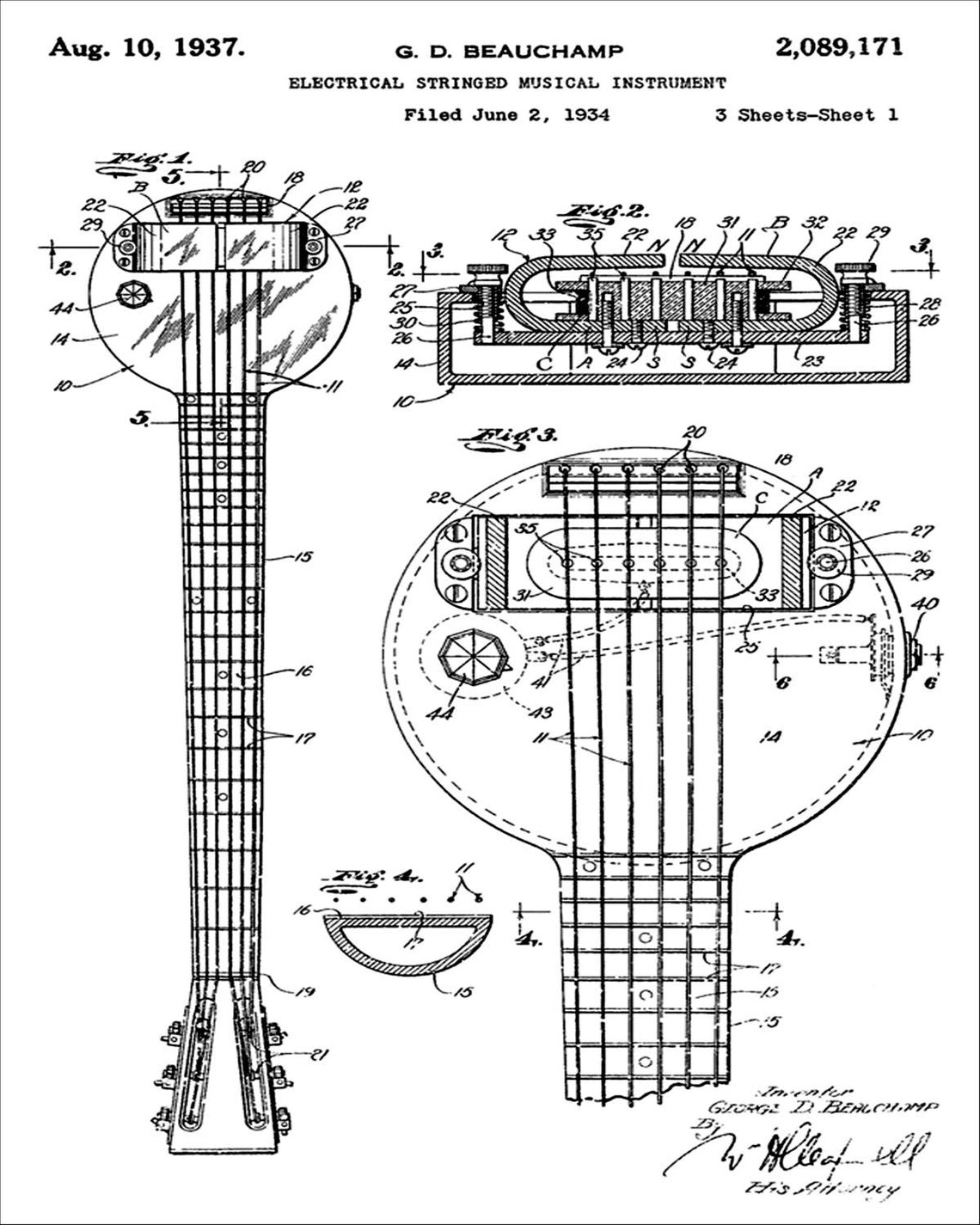
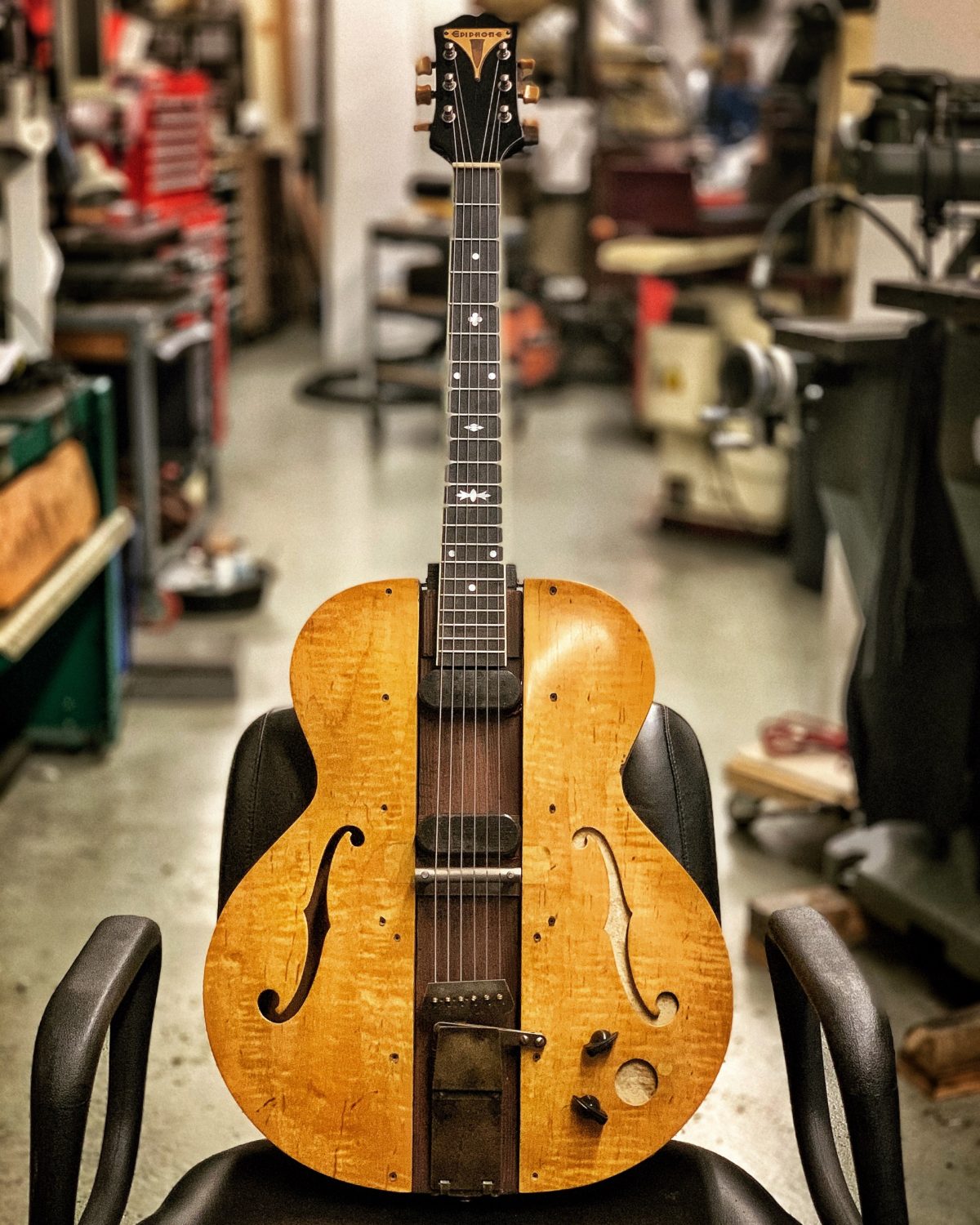
Rickenbacker's early "frying pan" designs were electrified Hawaiian lap steel guitars, essentially a proof of concept. Gibson followed with archtop designs using magnetic pickups. These were significant steps, but the instruments still fought feedback and mechanical interference at stage volumes.
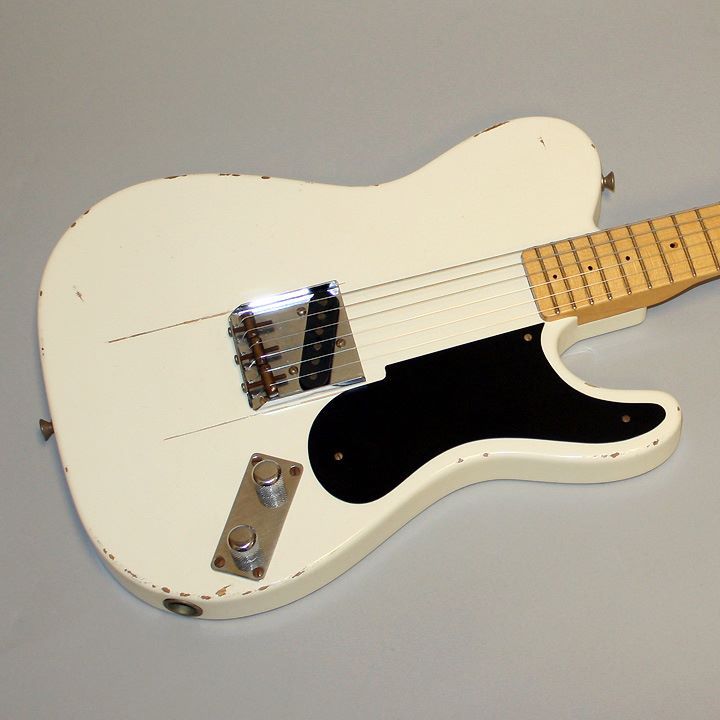
The decisive shift came with Fender's Broadcaster, later the Telecaster, in the early 1950s. The solid body eliminated most of the feedback issues that had plagued earlier electric and semi-acoustic designs. What Fender's design clarified was the central engineering objective of the electric guitar: capture the mechanical vibrations of a plucked string with minimal interference, and translate them into a pure electrical signal. The body had become a platform rather than a resonating chamber.
Coupling in Acoustic Guitars
To understand what coupling means in an electric guitar, it helps to start with acoustics, where the principle originated.
When a string is plucked on an acoustic guitar, the vibration travels through the saddle and bridge into the soundboard. The soundboard, typically spruce or cedar and braced with deliberate asymmetry, acts as the primary resonating surface. It amplifies the string's energy and adds its own tonal character. What you hear is a complex blend of string, wood, and body architecture.
"The consensus among luthiers is that face and back woods need to be chosen from woods of differing densities because the resonant frequency of the back needs to be higher than the resonant frequency of the face, by at least a tone."
Ervin SomogyiThis is mechanical coupling in its most literal form: energy transferred from string to bridge to soundboard, with each material contributing to the final output. The acoustic guitar is optimized for maximum energy transfer into the body. Every construction decision serves that goal.
The Electric Guitar's Different Problem
Solid-body electric guitars have a different objective, almost the inverse of an acoustic. Where acoustic guitars maximize resonance, electric guitars need to sustain the string's vibration long enough for the pickup to capture it accurately. Excessive body resonance in an electric guitar can interfere with that process, coloring the signal before it ever reaches the pickup.
The pickup is the tonal arbiter in an electric guitar. Its job is to convert the string's vibration into an electrical signal with fidelity. For that signal to be clean, the string needs to vibrate freely, and the mechanical path between string and body needs to transfer energy without loss or distortion.
This is where coupling decisions become audible. A bridge with insufficient mass bleeds energy. A neck joint with play or movement dissipates vibration at the worst possible point, the junction between the two largest components. A body material that damps too aggressively shortens the string's sustain. Every one of these is a coupling failure, and players feel them even when they can't name them.
Material and Construction
The body of a solid-body electric guitar is an active element. Woods have unique densities, resonant frequencies, and damping characteristics, and they interact with string vibration in ways that are measurable and audible. Alder tends toward a balanced, even response. Mahogany leans warmer and fuller. Swamp ash is articulate in the lows and clear through the highs. These differences are the consequence of different physical properties doing different things to the same string energy.
The bridge is the first structural point of coupling and one of the most consequential. Its material, mass, and contact geometry determine how efficiently string energy transfers to the body and how that energy is shaped before it decays. This is why the Artifact original three-piece bridge is built around mass and precision contact rather than cost. The bridge is the primary mechanical link between the vibrating string and everything below it.
The neck joint is the second major coupling point. A bolt-on joint with any play between neck heel and body pocket dissipates energy at that junction. A set-neck provides more mechanical continuity but introduces its own constraints. The Artifact Bolt-Through™ neck joint threads the neck through the body and fastens on the other side, creating the mechanical continuity of a neck-through while preserving the tonal character and replaceability of a bolt-on. The coupling at that joint is direct and loss-free.
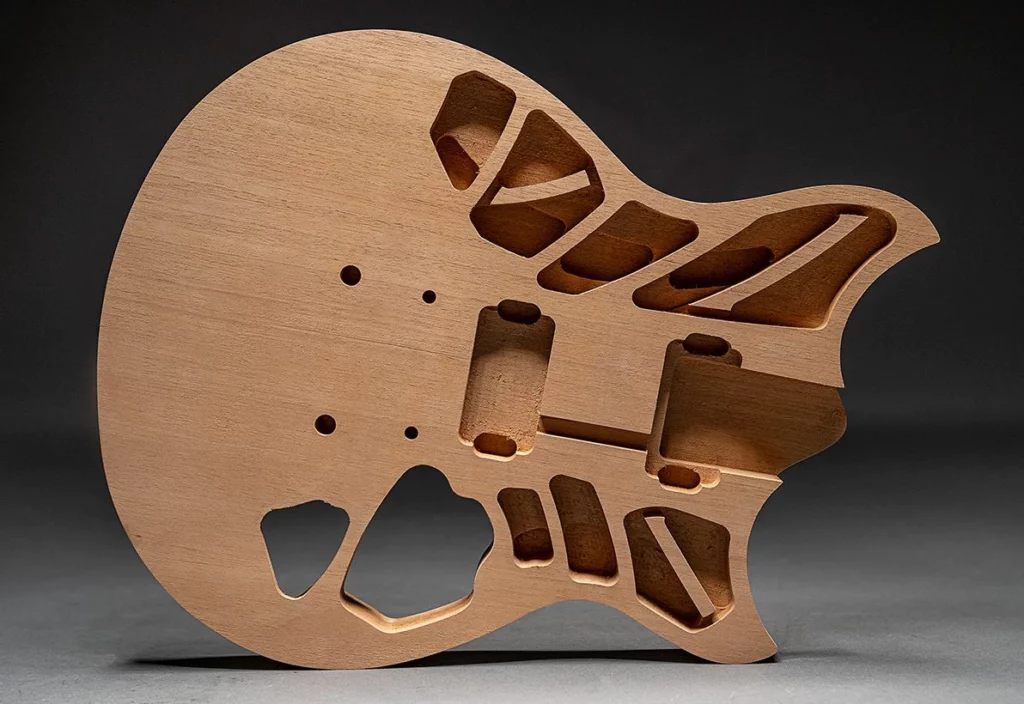
Chambered and semi-hollow body designs occupy a middle ground, introducing controlled resonance into an otherwise solid structure. Done with intentionality, this allows a builder to tune the body's resonant characteristics rather than simply eliminating them. Yamaha's Revstar is one of the clearest examples of this approach applied with engineering discipline rather than marketing intuition.
Pickup Design and the Boutique Market
The pickup is where mechanical coupling becomes electromagnetic coupling. The string vibrates within the pickup's magnetic field, inducing a current in the coil. That current, shaped by the coil's winding pattern, wire gauge, magnet type, and a dozen other variables, becomes the signal the amplifier receives.
The boutique pickup market exists because players recognized, often before builders acknowledged it, that these variables are audible. The chase for "golden-era" sounds from 1950s and 1960s instruments is fundamentally a chase for specific coupling characteristics: particular magnet formulations, specific winding tensions, the way aged materials behave differently than new ones. These are engineering realities.
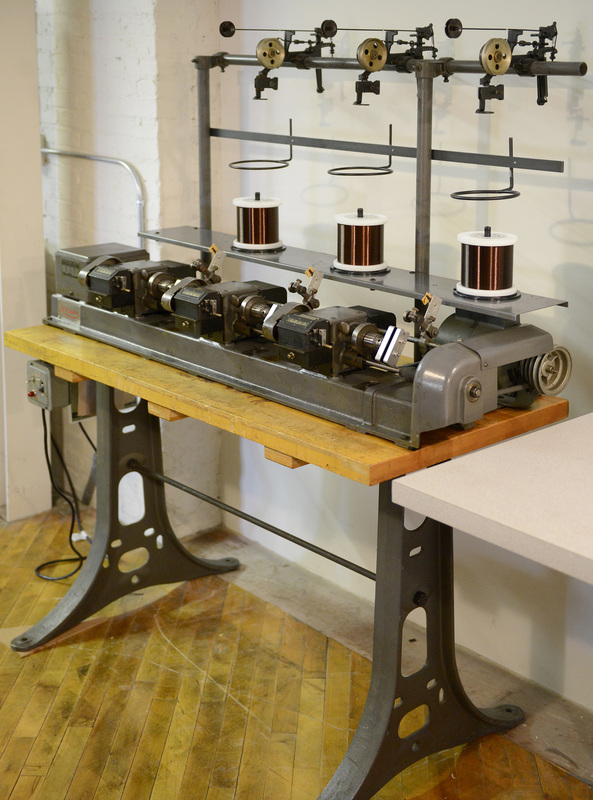
Companies like ThroBak have gone to extraordinary lengths to replicate golden-era coupling characteristics, sourcing original winding machines, vintage wire, and period-correct magnets, because they understand that the electromagnetic coupling of a pickup is as sensitive to its construction details as any other part of the instrument. At Artifact, pickups are wound in-house to specification for each instrument, because the relationship between a pickup and the specific instrument it's mounted in matters. A pickup is part of the coupling chain.
Why This All Connects
Coupling is the cumulative result of every material choice, every joint design, and every hardware specification made during construction. A guitar with a well-coupled bridge and a poor neck joint will still lose energy at the joint. A guitar with excellent mechanical coupling and a mismatched pickup will translate that energy poorly. The instrument is a system, and the system is only as strong as its weakest coupling point.
This is why Artifact instruments are designed the way they are, from the thermally modified tonewoods selected for their specific resonant behavior, to the Bolt-Through™ neck joint, to the original bridge, to the in-house pickups. Every decision is made in the context of the whole coupling chain, as a system.
The electric guitar has been refined for nearly a century, and most of what has been discovered about it is still not applied consistently at the production level. That gap is where Artifact works.
Aryeh East
The principles in practice