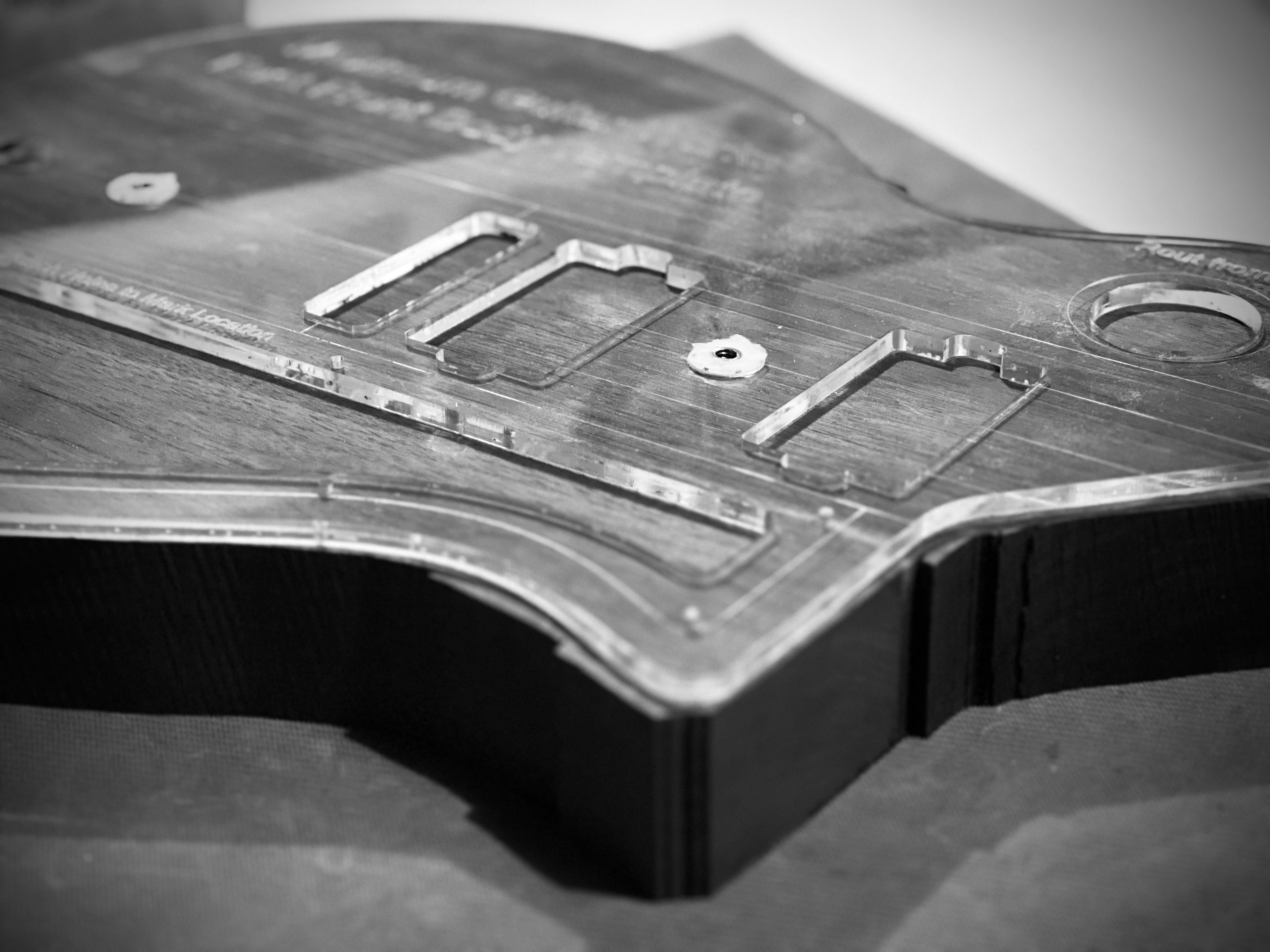
Fender has started enforcing the Stratocaster body shape, and nearly everyone in the guitar business seems to have agreed that Fender is the villain.
I’m not convinced.
I’m also not a lawyer, so I’m not particularly interested in arguing about what a German court decided, what Fender did or didn’t protect in the United States, or how any of this will eventually shake out. Other people are far more qualified to have that argument, and they will probably be having it for years.
The part I care about is much simpler.
Somebody designed that guitar. Other people copied it.
That fact seems to disappear whenever this subject comes up.
The Desert Island Test
Forget Fender for a minute. Forget the corporation, the lawyers, the trademarks, and whatever feelings you have about the company today.
Put two builders on an island.
One of them spends a year designing an instrument. She draws it, builds it, plays it, hates it, and starts over. She moves the waist. Changes the horn. Adjusts where the forearm falls. Builds another one. Then another.
Eventually, after a pile of failed attempts, she arrives at something that works.
The second builder waits until she is done, traces the outline, and begins selling the same instrument with his name on it.
When she objects, he tells her his version is better. Or cheaper. Or that her design has been around long enough that it belongs to everyone now.
There are no courts on the island. No trademarks. No attorneys.
You still know what happened.
That is the part I have trouble getting around.
It Feels Different When the Builder Is Small
Imagine someone did this to Dennis Fano.
Imagine a large company traced one of his designs, put it into mass production, and sold it for half the price. Then imagine the company explaining that the design had been around for years, people were familiar with it, and it had become part of the general language of guitar design.
The guitar community would be furious, and rightly so.
People would raise money for his legal defense. Builders would post long statements about originality, integrity, and protecting independent makers.
The act itself would be exactly the same. The only difference would be the size of the person or company being copied.
That is where I lose sympathy for much of the outrage directed at Fender.
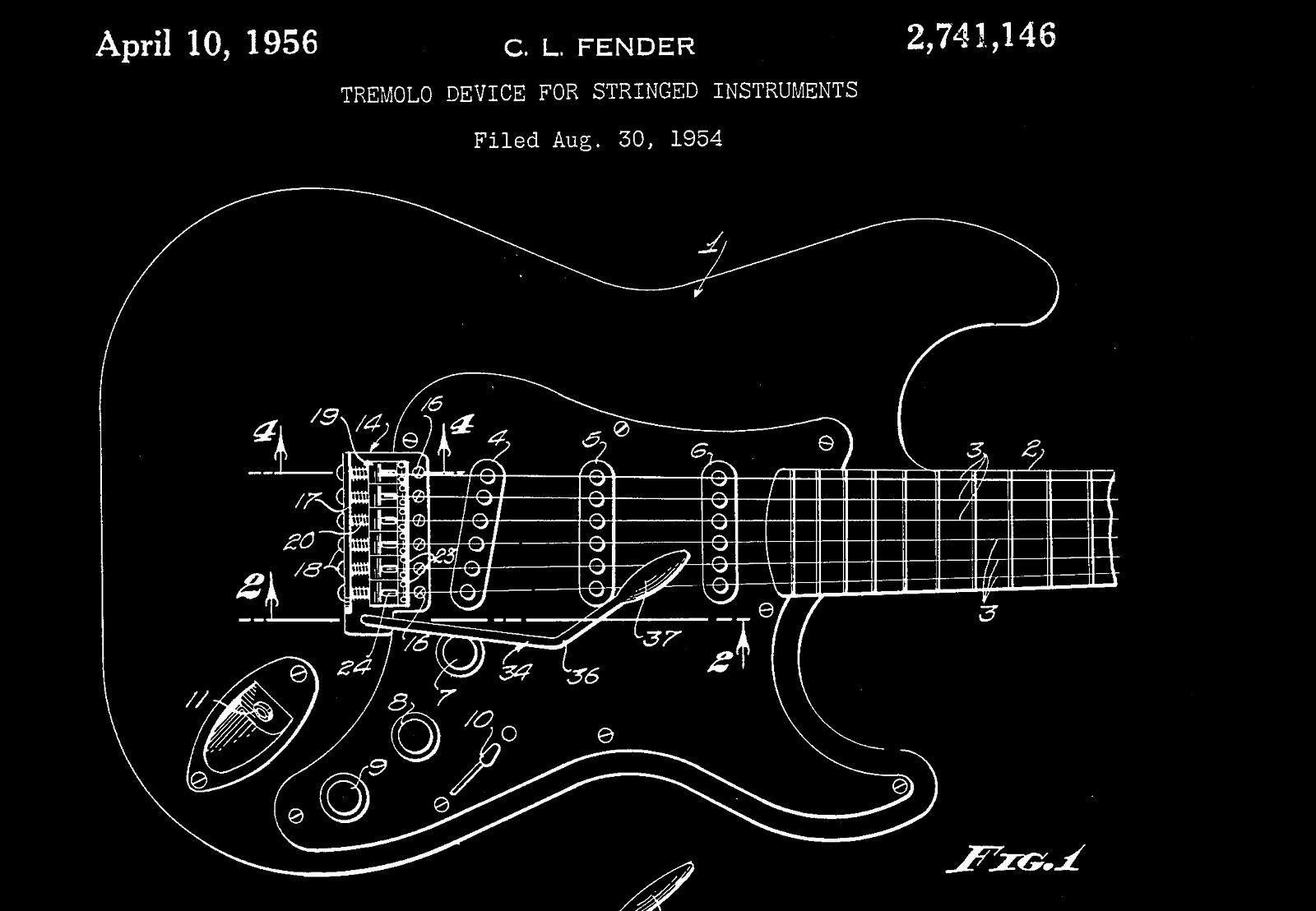
Leo Fender, Freddie Tavares, and George Fullerton worked out the Stratocaster between 1952 and 1954, with input from players including Bill Carson and Rex Gallion. The fact that they worked for a company does not make their design less real. The fact that the company is now enormous, and owned by people who had nothing to do with creating it, does not somehow erase the act of creation.
I have my own complaints about Fender. Most builders do.
None of those complaints make the Stratocaster shape anonymous.
Shared Language and Direct Copies
There is an obvious problem with this argument.
Instrument makers have always borrowed from one another. We work inside a shared language.
Nobody expects every builder to invent a completely new neck joint, scale length, pickup arrangement, control layout, or method of attaching strings to a piece of wood. A builder refusing to use anything that had been done before would probably end up making an instrument nobody wanted to play.
A dreadnought is a type of guitar now. So is a violin built to a traditional pattern. The electric guitar has its own vocabulary: bolt-on necks, offset waists, double cutaways, six-in-line tuners, three single-coil pickups.
Using that vocabulary is unavoidable.
The question is what you do with it.
Vocabulary Is Not the Same as Copying
The strongest objection to everything I have written is that instruments operate within a shared vocabulary. It is a good objection, and the distinction matters.
Words belong to everybody. Sentences do not necessarily belong to everybody.
If I take a sentence you wrote, rearrange a few words, replace two adjectives, and present the same construction and idea as my own, the question is not settled by pointing out that you do not own the English language. Of course you do not. That was never the accusation.
The accusation is that I used a shared language to reproduce your particular expression.
Guitar design works in much the same way.
Nobody owns the concept of a waist, a cutaway, an upper horn, a lower bout, a bolt-on neck, or six tuners arranged along one edge of a headstock. Those are words. So are scale lengths, pickup locations, control layouts, bridges, neck joints, and the basic requirement that a guitar fit against a human body while allowing the player to reach the fretboard.
Every builder uses them. We have to.
The shape of a Stratocaster, however, is not merely the presence of two horns and a waist. It is a specific relationship among those elements. It is where the waist falls, how far each horn extends, how the curves accelerate and resolve, where the widest points of the bouts occur, and how all those decisions create a silhouette that can be recognized from the other side of a room.
Those relationships form the sentence.
A builder does not escape the question by changing the bridge, pickups, neck radius, or headstock while leaving the sentence substantially intact. That is the design equivalent of changing a few nouns while preserving the structure of the paragraph.
There will always be difficult cases. Influence exists on a continuum. There is no ruler that can tell us exactly when a familiar idea becomes a copy. That ambiguity does not mean there is no distinction. We make the same judgment in music, writing, industrial design, architecture, and every other field in which people create new work from inherited materials.
Every songwriter uses the same twelve notes. That does not make every melody available for reproduction.
Every writer uses the same dictionary. That does not abolish plagiarism.
Every guitar builder uses curves, strings, frets, pickups, and wood. That does not make every completed outline anonymous.
The dreadnought is a useful example because an acoustic guitar is more constrained by function than an electric guitar. Its body must enclose a useful volume of air. Its top needs enough surface area to move. The bridge, waist, soundhole, neck joint, and internal bracing all have acoustic and structural consequences. There are only so many sensible ways to arrange those elements while producing a large, loud, conventionally playable flat-top guitar.
That does not mean every dreadnought must be a line-for-line Martin copy. It does mean that the available vocabulary is narrower because the shape is doing more physical work.
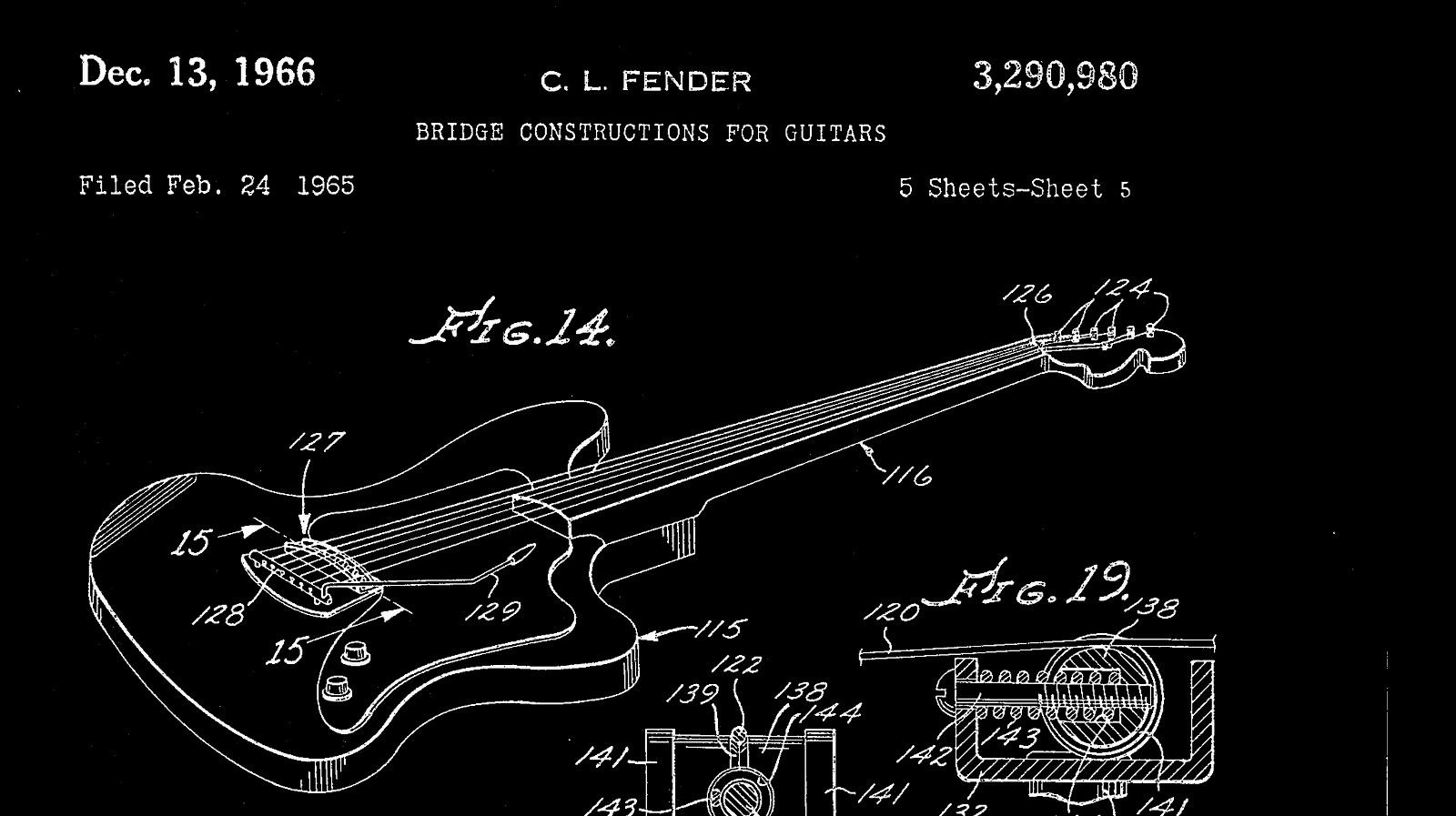
A solidbody electric guitar does not face the same constraint. Its outline has little responsibility for producing or projecting the sound. A builder has considerably more freedom, which makes exact duplication harder to defend as functional necessity. The Stratocaster did not need to have precisely those curves in order to operate as an electric guitar. We know this because Fender itself designed the Telecaster, Jazzmaster, Jaguar, Mustang, and numerous other functioning instruments using the same basic vocabulary.
The Jazzmaster shares nearly every word with the Stratocaster. It has a neck, two horns, a waist, pickups, controls, and a bridge. Nobody mistakes it for a Stratocaster.
That is what original design looks like. The designer accepts the existing language and still takes responsibility for the sentence.
Fano is the clearest modern example I know. His instruments are full of recognizable references to vintage American guitars, but those references have been processed through someone’s judgment. The proportions moved. The lines changed. The influences became part of a coherent design language that belongs to him.
Novo did the same.
You can see where those instruments came from without wondering whose instrument you are looking at.
That is the work.
Tracing a Stratocaster closely enough that the bodies can be stacked together is not participation in a shared vocabulary. It is avoiding the work while claiming the result.
The Silver Sky
When PRS released the Silver Sky, nearly everyone understood what it was.
The jokes were immediate because the situation was obvious. PRS had spent decades establishing its own design language, its own body shapes, headstocks, inlays, and hardware. Then it released what looked, at first glance and nearly every glance after that, like a Stratocaster.
Now that PRS has received a letter from Fender, some of the same people who laughed at the Silver Sky are treating it as a symbol of creative independence.
I don’t find the arguments about its differences very persuasive. Yes, it has a different headstock. Yes, the radius, pickups, hardware, and smaller details differ.
But look at one and say what it is before you see the logo.
You know.
Someone on The Gear Page once made a composite image of a Silver Sky with a Fender headstock. That small change effectively ended the argument. Everything supposedly unique to the Silver Sky remained, yet it immediately read as a Fender Stratocaster.
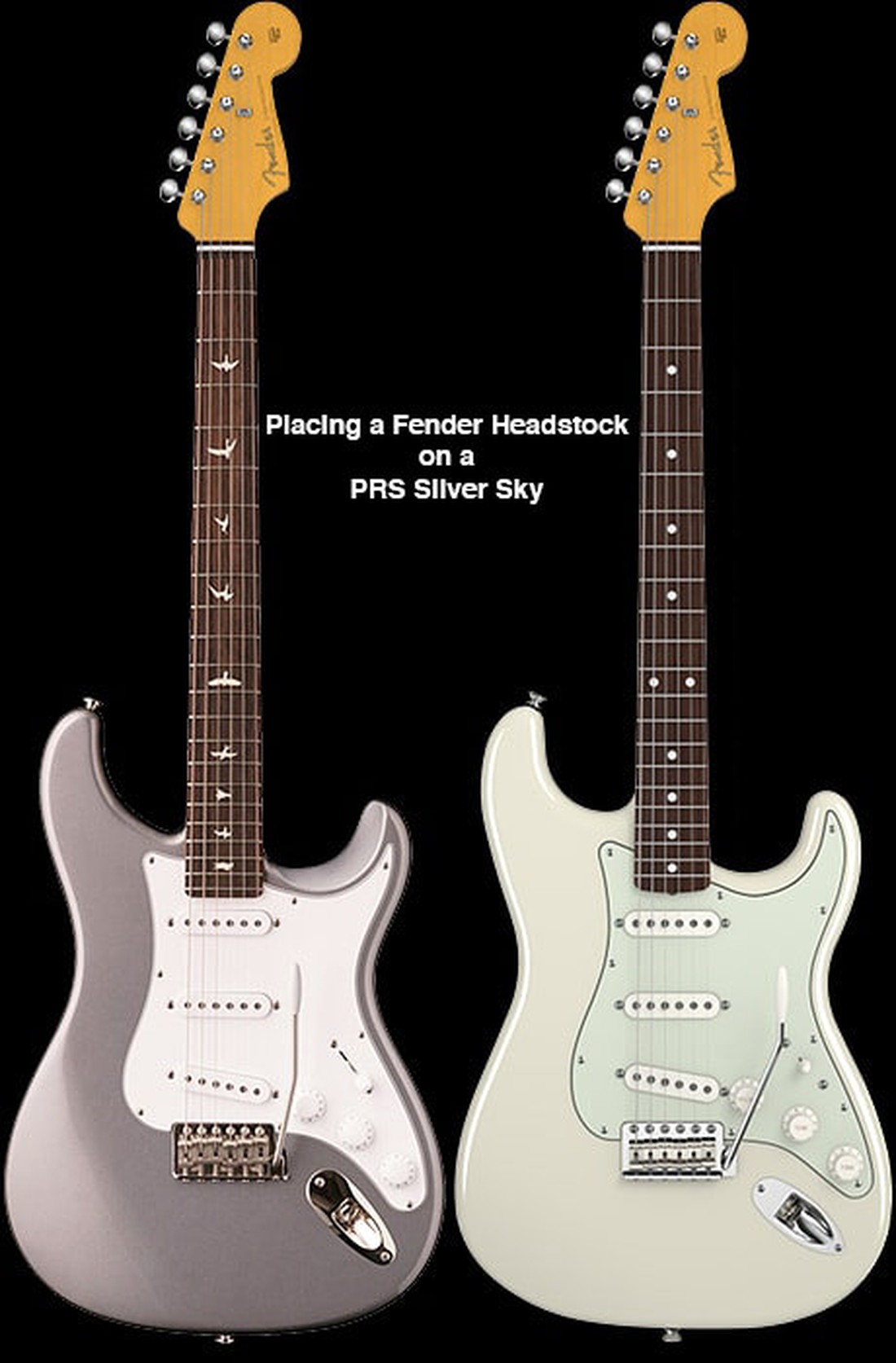
The body was doing most of the identifying all along.
What We Lose by Copying
I’m not especially worried about Fender’s revenue. Fender will be fine.
What bothers me is how much talent in this business has been spent refining the same outline for seventy years.
There are exceptional builders whose entire careers consist of making very good versions of a guitar designed in 1954. Their instruments may be beautifully made. They may improve the fretwork, neck shape, finish, hardware, or consistency. Some may build a better Stratocaster than Fender does.
I still wonder what those builders might have created if copying the Stratocaster had never been an option.
What the Copying Actually Costs
The immediate response to Fender’s enforcement campaign has been to talk about the companies that could be damaged, the builders who may have to discontinue models, and the employees who may lose their jobs.
Those consequences are real. They also raise a question nobody seems eager to ask.
Who created that risk?
If you start a company whose primary product is a near-copy of somebody else’s design, you are making a bet. You are betting that the original owner cannot protect it, will not protect it, or has waited long enough that protection is no longer possible.
That may be a legally intelligent bet. It may even be a winning one.
It is still a bet.
Once you hire employees, sign leases, borrow money, accept dealer orders, and build a brand around the product, other people become exposed to that bet. They may not know it exists. The person sanding bodies or answering the telephone probably did not conduct a trade-dress analysis before taking the job. They were told they were joining a guitar company.
If the legal assumption fails, those employees absorb consequences from a decision they did not make.
That is not simply Fender destroying small businesses. It is also the result of owners treating another company’s continued tolerance as though it were a permanent asset of their own.
Tolerance is not ownership.
A company that spent years building an original design would still face ordinary commercial risks. Customers might reject it. Production might cost too much. The instrument might fail. A competitor might produce a genuinely different and more compelling alternative.
Those are the risks of creating something.
Building around a copied shape replaces some of those risks with another one. The market already understands the product. Demand already exists. The design work has largely been done, and decades of cultural recognition come with it. In exchange, the company becomes dependent on the continuing inability or unwillingness of somebody else to object.
It borrowed certainty from somebody else’s work and passed the unresolved liability to its employees.
When that ends in discontinued models or layoffs, the human cost should not be dismissed. It should also not be used to erase the original decision.
The employees deserve sympathy. The business strategy deserves scrutiny.
A founder has a responsibility to ask whether the thing supporting payroll actually belongs to the company. That responsibility becomes more serious as the company grows. It is one thing for an individual builder to make an S-style guitar for himself. It is another to employ twenty people, build a dealer network, and stake their livelihoods on the assumption that a traced outline will remain available forever.
The larger the company becomes, the less persuasive innocence becomes.
These businesses were not ambushed by the existence of the Stratocaster. Their entire commercial proposition depended on knowing exactly what it was and exactly how much demand Fender had created for it.
They recognized the value clearly enough to build companies around it.
They simply did not recognize the obligation that came with that value.
Why I Care
I’m not neutral about this.
The Artifact took years to design. Most of the prototypes no longer exist. Some were cut apart. Some became firewood. Many of the changes between them were small enough to sound ridiculous when described aloud.
A contour moved slightly. A heel extended farther into the body. A bridge redrawn because the previous version still wasn’t right. Fractions of an inch argued over for weeks.
Those things mattered to me, even when nobody else knew the instrument existed.
There was no market demanding it. Nobody had commissioned it. Nobody was waiting for me to finish. It was simply something I could not stop thinking about.
Eventually, all those small decisions became an instrument.
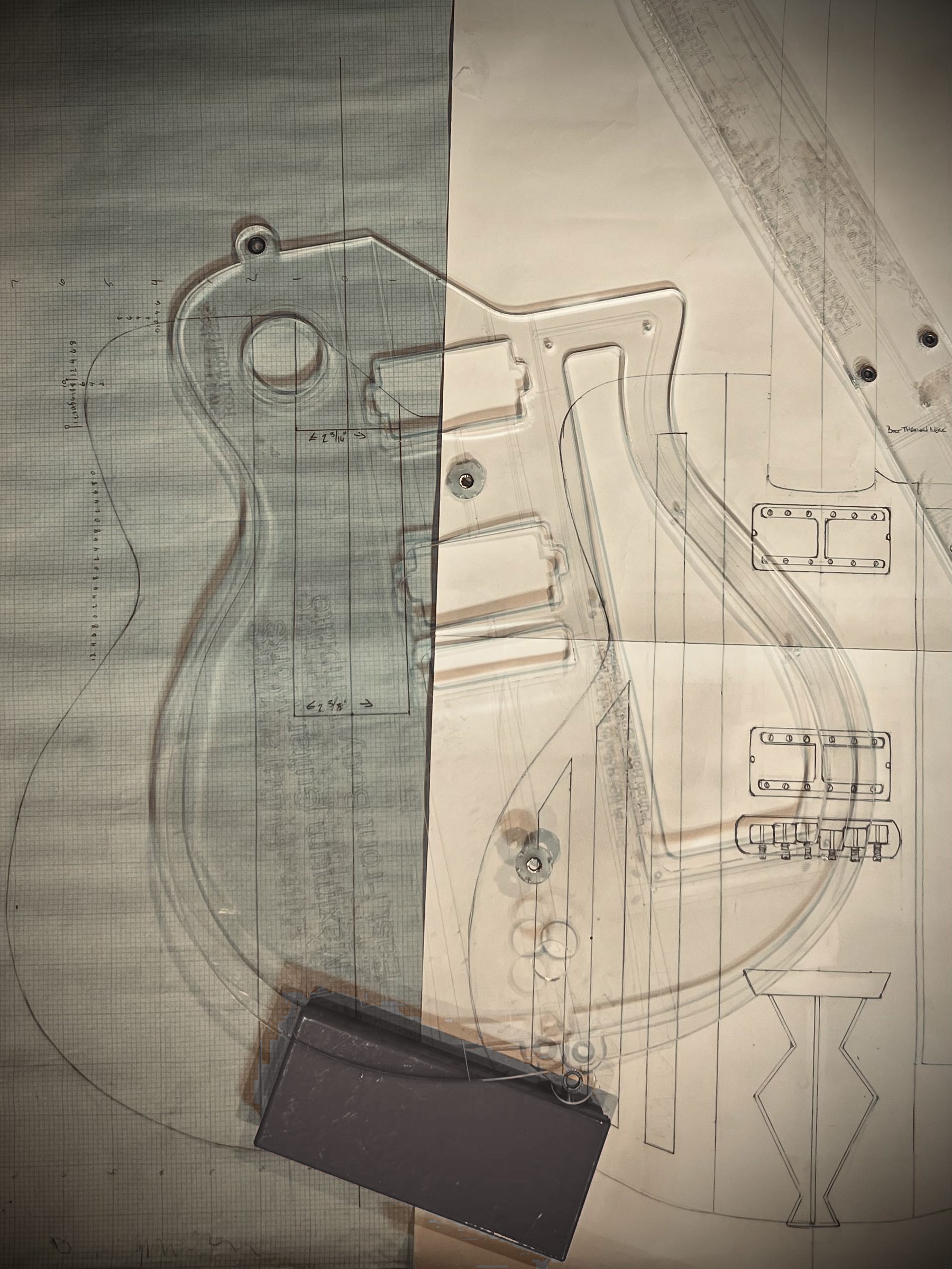
That experience obviously affects how I see this argument. A position against copying is convenient for someone trying to sell an original design. That bias is real and worth acknowledging.
But the commercial concern is not the part that stays with me.
If someone traced the Artifact, changed a few details, put another name on the headstock, and explained that their version was cheaper or better, I would be devastated.
Not because I believe every idea deserves permanent legal protection. Not because influence can or should be prevented. Every designer is influenced by what came before.
I would be devastated because I know what went into drawing those lines.
That human part gets lost when the conversation becomes exclusively about corporations, legal precedent, and market competition.
Before the Stratocaster was an industry standard, it was a drawing. People worked on it, changed it, built prototypes, and tried to make something that had not existed before.
Whatever anyone thinks of Fender today, that is still how the story began.